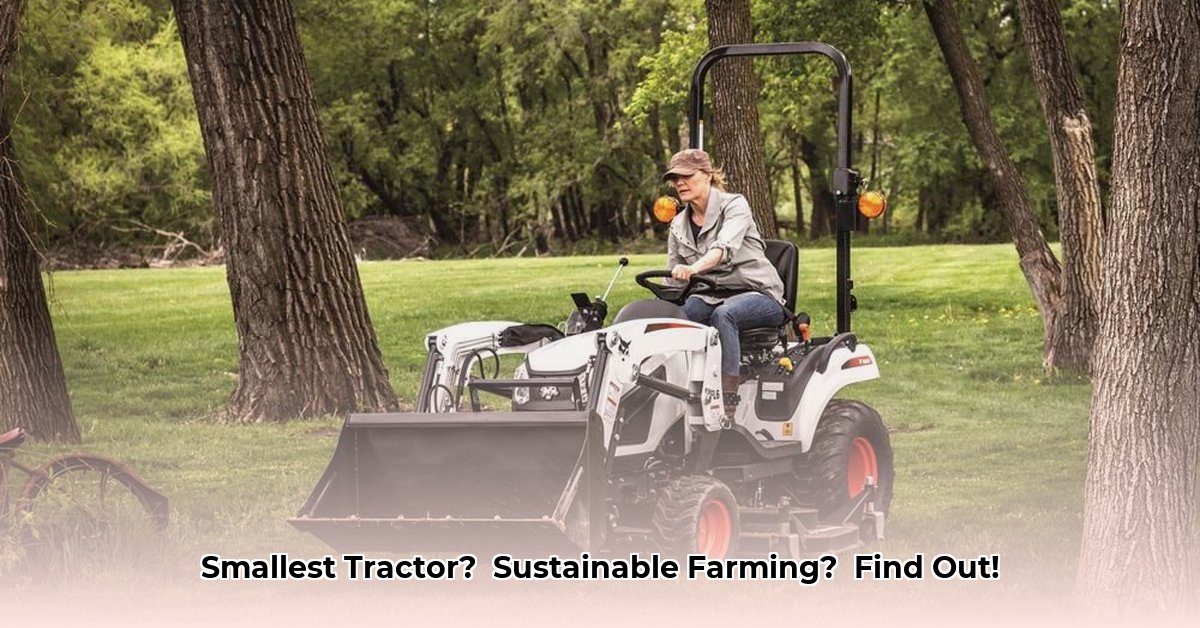
Finding the perfect sub-compact tractor for sustainable farming can be challenging. This guide simplifies the process, helping you select a machine that aligns with your land, budget, and farming practices. We'll explore key features, compare popular models, and delve into long-term considerations. For more on tractors for smaller properties, check out this helpful resource: Tractor Guide.
Defining Your Needs: Assessing Your Farming Operation
Before exploring tractor options, thoroughly assess your operation. What's your land size? A small, maneuverable tractor might suit a few acres, while a larger machine might be necessary for more extensive land. What tasks will your tractor perform? Consider mowing, tilling, hauling, and specialized implements. List all tasks to determine the needed horsepower and lift capacity.
Budget is a critical factor. Sub-compact tractors vary significantly in price. Setting a realistic budget beforehand will effectively narrow your search. Finally, consider your desired level of automation. Some tractors offer advanced features like automatic transmissions, while others are simpler. Decide what best suits your comfort level and farming practices. This thorough assessment is the foundation for a successful purchase. What are your key priorities for this tractor purchase?
Key Features and Specifications: Decoding the Technical Details
Several features determine a sub-compact tractor's suitability. Let's dissect these:
Horsepower (HP): This indicates the tractor's power. More HP usually means handling larger loads and tougher tasks, but also higher fuel consumption. Choose the HP that matches your tasks.
Lift Capacity: This is the maximum weight the three-point hitch can lift, directly affecting the implements you can use. Ensure compatibility with your desired implements.
Transmission Type: Hydrostatic (HST) transmissions offer smooth, variable speed control, great for precision, but can be less fuel-efficient. Gear transmissions are typically more fuel efficient but require more operator skill.
Three-Point Hitch: This system is vital for attaching implements. Verify its lift capacity for compatibility.
Fuel Efficiency: Fuel costs are a long-term consideration. Reliable fuel efficiency data is challenging to find. Consult dealers and owner reviews for comparisons.
Power Take-Off (PTO): The PTO transmits power from the tractor to implements. Its horsepower is crucial for power-hungry implements. Does your planned usage require a high-horsepower PTO?
Model Comparisons: Popular Sub-Compact Tractor Choices
Several reputable brands offer excellent sub-compact tractors. The following table offers a comparison; remember that prices are estimates and may vary by location and features included:
| Model | Horsepower (approx.) | Lift Capacity (lbs, approx.) | Estimated MSRP (USD) | Transmission Type | Notable Features |
|---|---|---|---|---|---|
| John Deere 1025R | 25 | 750 | $15,000 - $20,000 | Hydrostatic | Reliability and wide implement compatibility. |
| Kubota BX1880 | 24 | 750 | $14,000 - $18,000 | Hydrostatic | Compact design ideal for smaller properties. |
| Mahindra eMax 20S HST | 19 | 650 | $12,000 - $16,000 | Hydrostatic | Often a more budget-friendly option. |
| New Holland Workmaster 25S | 25 | 850 | $15,500 - $21,000 | Hydrostatic | Handles a wider array of heavier implements. |
| Massey Ferguson GC1725M | 17 | 700 | $11,000 - $15,000 | Hydrostatic | Strong contender in the lower price range. |
Always confirm specifications with your local dealer. Pricing varies based on location and dealer promotions.
Implement Compatibility & Sustainable Practices: Tools for Eco-Friendly Farming
Implement selection is crucial for sustainable farming. Precision tillage minimizes soil disturbance, preserving soil health. Cover cropping and integrated pest management (IPM) reduce reliance on harmful chemicals. Choose implements compatible with your tractor and sustainable farming methods.
Maintenance, Costs, & Long-Term Considerations: Total Cost of Ownership
Factor in regular maintenance, parts availability, and potential repairs. Different brands have varying reputations for parts availability and repair costs. Consider fuel, oil changes, filter replacements, and potential repairs. A used tractor might seem cheaper, but inspect carefully. Financing options can help but carefully review loan agreements.
Conclusion & Next Steps: Making Your Informed Decision
Choosing a sub-compact tractor requires careful consideration. This guide provides the knowledge to make an informed decision. Assess your needs, compare models, and plan for long-term costs. Consult a local dealer for recommendations personalized to your needs.